
MAAD Help

Introduction
About MAAD

Overview

MAAD is an open-access, curated resource hosting over 27,500 antibody and nanobody entries targeting six major human viruses: SARS-CoV-1, SARS-CoV-2, MERS-CoV, Influenza Virus, RSV, and hMPV. Each entry is annotated with:

  • Target Specificity: Antigen and epitope details.
  • Sequence Data: Full-length or variable region amino acid/nucleotide sequences.
  • Functional Characterization: Binding and/or neutralization to viral strain.
  • Germline Annotations: V/J gene assignments.
  • CDR Annotations: Annotated under IMGT, Kabat, and Chothia schemes, with length statistics.
  • Structural Data: Direct links to PDB entries for 3D structures.
  • Sources: PubMed IDs or patent numbers for original references, plus collection/publication dates.
Antibody Search
CDR Analysis
CDR Analysis

The search will match sequences of identical length, leveraging N-Gram indexing and LIKE queries to identify similar or embedded subsequences:
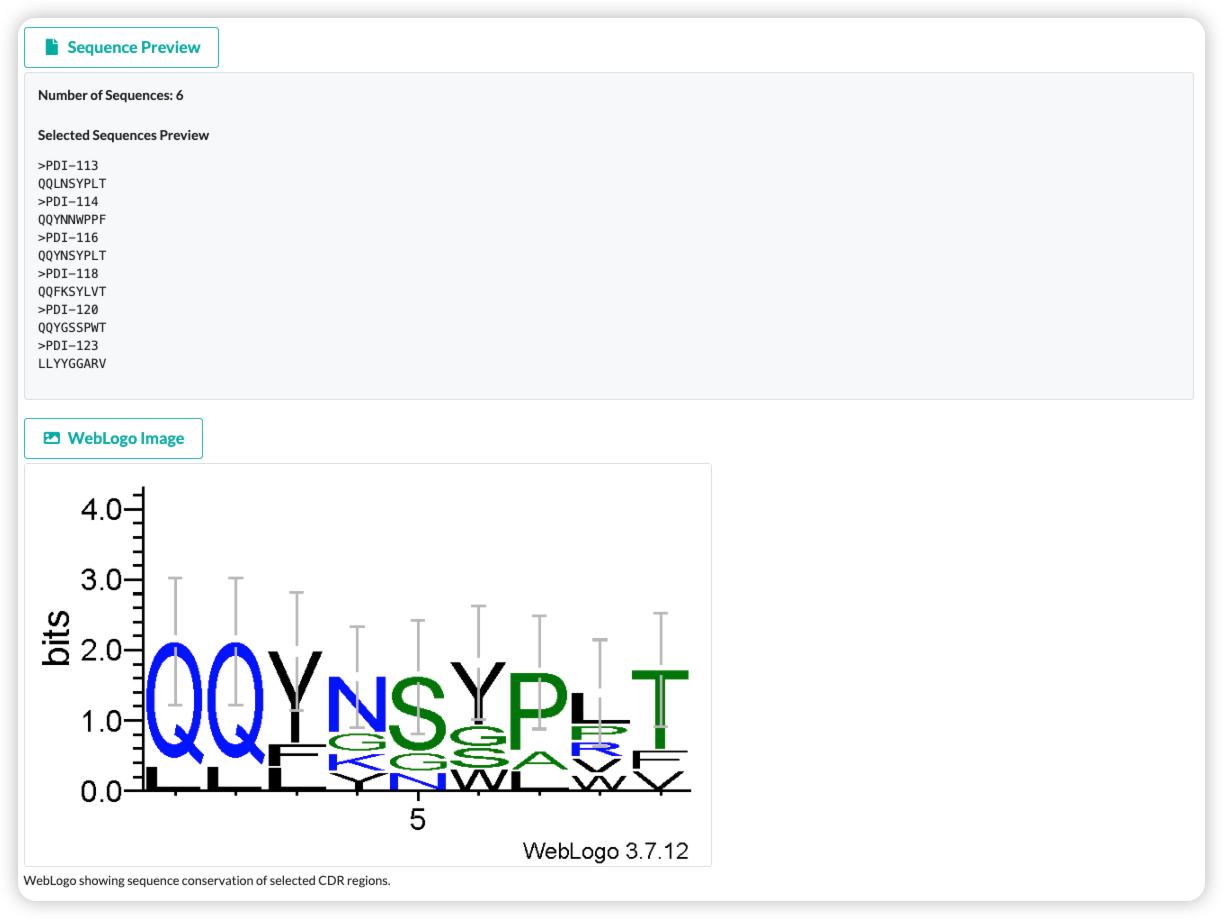
  • Input: Provide individual CDR sequences (CDR1/2/3) and select a numbering scheme (IMGT, Kabat, or Chothia) and chain type (Heavy or Light).
  • Output:
    • Matched entries filtered by CDR length or sequence similarity.
    • Interactive visualizations:
      • Sequence logo plots (via WebLogo) constructed for CDR regions of identical length.
      • Pairwise alignment visualization with mismatch highlighting for equal-length sequences.
Sequence Similarity Search

MAAD performs BLAST-based sequence alignment, querying both antibody nucleotide and amino acid sequences against the database:
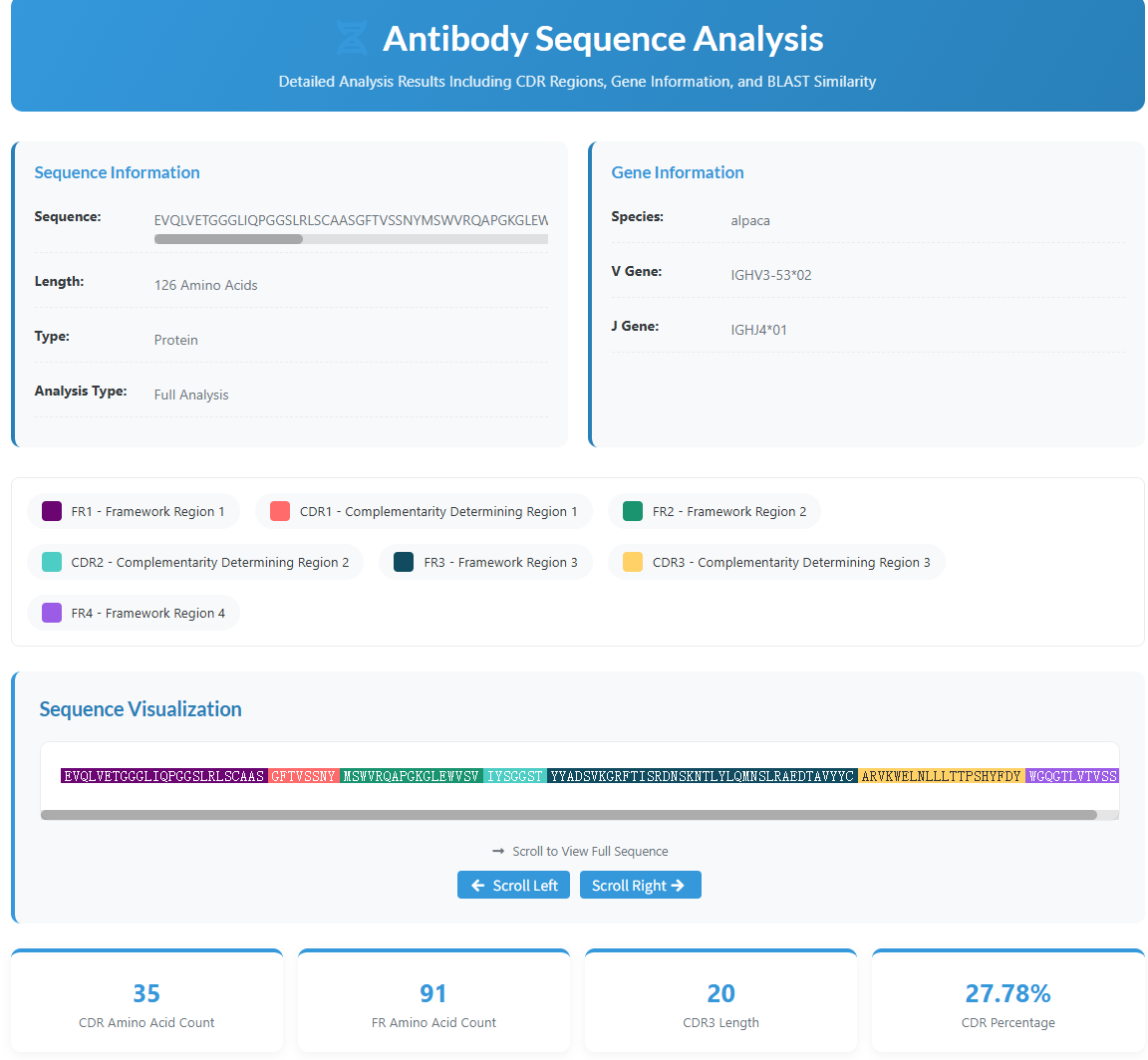
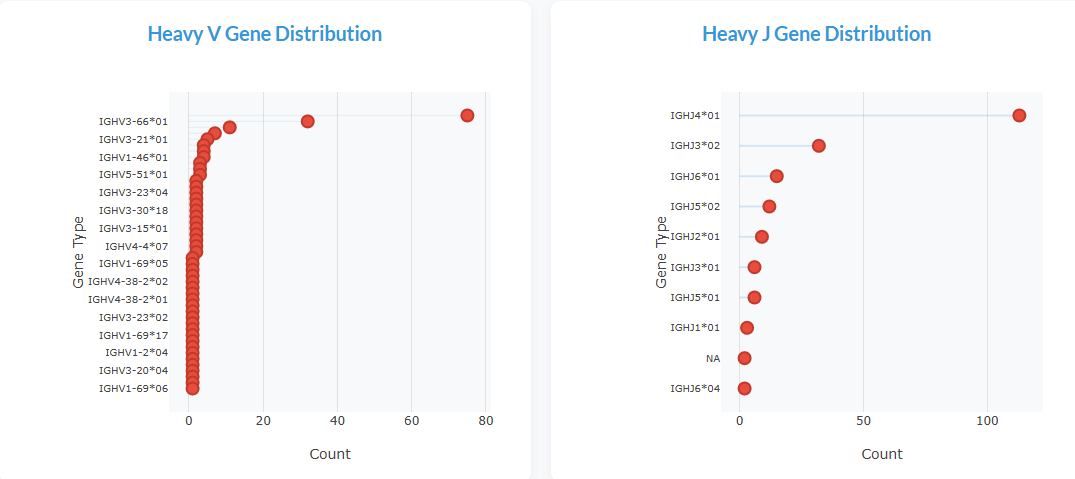
  • Input: Submit a variable region (VH/VL) nucleic acid or amino acid sequence.
  • Process: MAAD performs a BLAST search against the database.
  • Output:
    • A ranked list of the top 200 matched entries by sequence similarity.
    • Interactive visualizations:
      • CDR and V/J germline genes of the input sequence.
      • V/J gene usage dot plot (germline distribution).
      • Pairwise alignment viewer with mismatch highlighting.
Antigen-Antibody Interaction Profiles

MAAD provides antigen-antibody complex structures with detailed interface annotations and allows direct search by PDB ID on the search page.
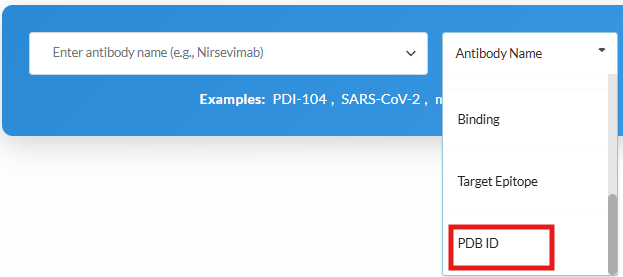
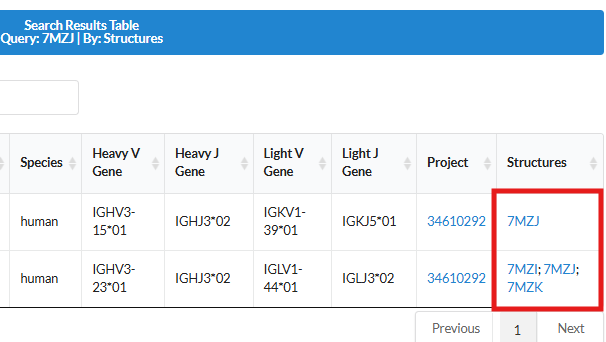
  • Step 1: Click the right-hand slider to choose a search type.
  • Step 2: View your results.
Sequence-Based Clustering and Tree Construction

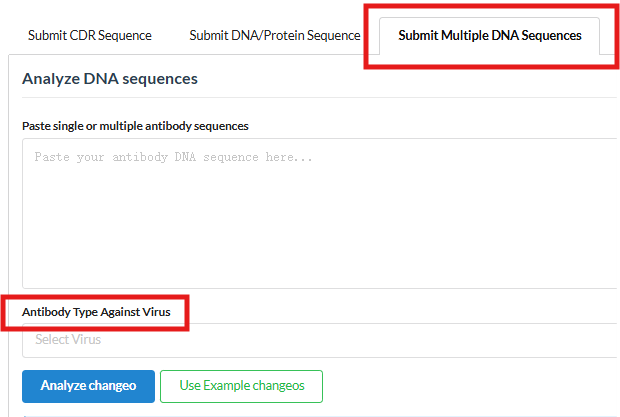
Users can input their own heavy chain nucleotide sequences and select target viral antibody sequences for joint analysis. Results can be downloaded from the results page. Tree construction may take some time, usually less than 3 minutes.
Downloads
Downloads

The Download module allows users to export customized or full datasets from MAAD in standardized .xlsx format. For each entry in MAAD, the following data is available for download:

  • Sequence Data:
    • Full-length amino acid (VH/VL) and corresponding nucleotide sequences (if available).
    • GenBank accession IDs (for nucleotide sequences).
  • CDR Annotation:
    • Annotated CDR1/2/3 regions of heavy and light chains using three schemes: IMGT, Kabat, and Chothia.
    • CDR lengths under each numbering convention.
  • Functional Information:
    • Confirmed activity against (binding and/or neutralization) target strain.
    • Target antigens (e.g., RBD, HA, F protein).
  • Structural Metadata:
    • Resolved structure IDs and direct hyperlinks to PDB entries.
  • Reference Information:
    • Source publication (PubMed ID or patent number).
    • Curation date (inclusion and publication timestamp).
Statistics
Statistics Module

Provides an overview of the MAAD dataset, enabling users to explore key trends and distributions:

  • Total number and distribution of antibodies/nanobodies per target antigen (Antibody Distribution).
  • Usage frequency of V/J genes across different antigens (Genotype Distribution). Genotype frequencies are categorized as: Low: all genotypes ranked within the top 30 by frequency; Medium: the top 50 most prevalent genotypes; High: the top 100 most prevalent genotypes.
  • CDR1/2/3 length distribution (CDR Statistics).
Frequently Asked Questions
Can I submit new antibody entries to MAAD?
Submission functionality is not yet available. Please contact the MAAD team if you are interested in contributing data.
Are all antibody entries experimentally validated?
MAAD includes both experimentally validated antibodies/nanobodies and sequence-only entries (from NGS datasets). Each entry is clearly labeled.
What functional data is available for each antibody?
Entries include annotations on binding and/or neutralization activity (if reported), target antigens (e.g., S, RBD, HA, head, F, preF), and developmental origin (e.g., human-derived, murine, or synthetic).
Can I download the nucleotide sequence of an antibody?
Yes. If available, the nucleotide sequence is provided along with the GenBank accession ID.
What is the "Sequence Mapping" function used for?
This tool compares the user's input sequence against all MAAD entries using BLAST and returns a pairwise alignment that highlights sequence differences (e.g., mutations or insertions).
Can I explore gene usage patterns in my query results?
Yes. The analysis module includes V/J gene usage dot plots for matched entries and sequence logo plots for CDR variability analysis.
How are "similar" and "contained" sequences defined in the search?
The system uses N-Gram indexing and LIKE search to identify:
Similarity: Sequences sharing common N-Gram patterns (substrings of length N), with adjustable thresholding for match precision.
Containment: A sequence is "contained" if it appears as a continuous substring within another sequence.
Contact
Contact

For questions, feature requests, or reporting issues, please contact us at:

wangjy@ibp.ac.cn

liyx@ibp.ac.cn

